Target Dry Density – 600 to 1400 Kg/m³
Cast-in-place NanoPORE™ Advanced Lightweight Aerated Concrete (NLAC) walls are not a one-size-fits-all solution; they are a highly adaptable building system uniquely suited to meet the demands of modern construction timelines, difficult geographies, and extreme environments.
- For Faster Construction of Houses
The Need for Speed: Traditional construction methods like brick-and-block masonry are slow, labor-intensive, and sequential. NLAC revolutionizes this process.
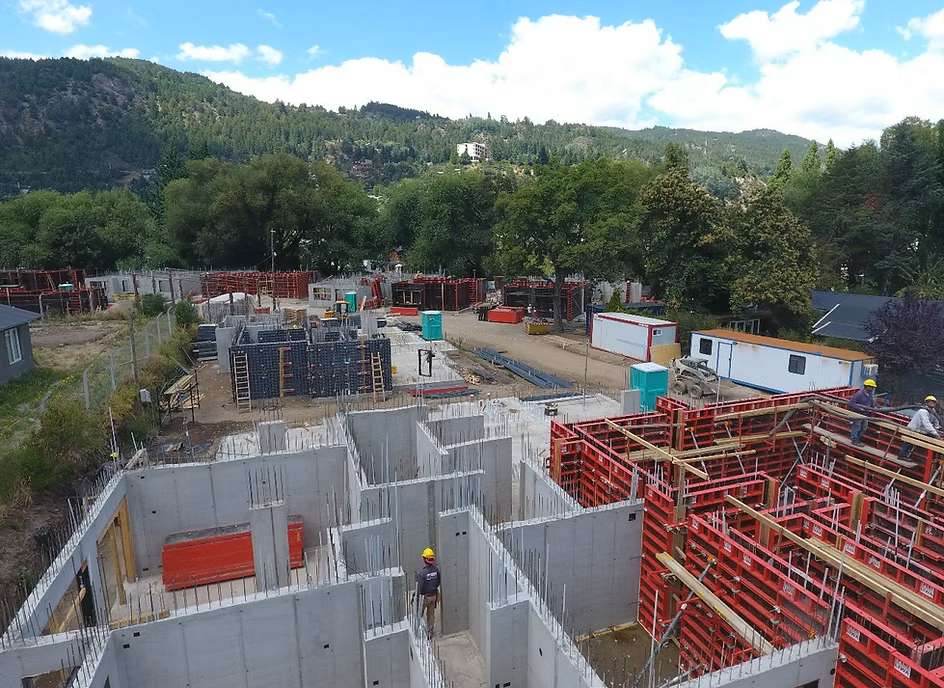
- Rapid Enclosure: Using simple formwork, entire walls can be poured in a single, continuous operation. This “monolithic pour” technique erects the building’s insulated envelope—structure, insulation, and air barrier in one—in a matter of days, not weeks.
- Simplified Workflow: It consolidates multiple trades (bricklaying, plastering, insulation installation) into a streamlined process. There is no waiting for mortar to cure or for separate insulation to be fitted.
- Pumpable Efficiency: NLAC’s flowable nature allows it to be pumped directly to the wall forms, even to upper stories, minimizing manual labor and material handling, further accelerating the project timeline and reducing labor costs.
- For Construction in Hilly Areas
The Challenges of Slopes: Building on steep or unstable slopes presents logistical and engineering nightmares. NLAC provides inherent solutions.
- Lightweight Nature: This is the most critical advantage. Transporting heavy building materials like concrete blocks and bricks up a hillside is dangerous and expensive. NLAC’s significantly lower weight reduces the load on access roads and simplifies material delivery to the site.
- Reduced Structural Load: A lighter building superstructure exerts less downward force (dead load) on the foundation and the underlying slope. This minimizes the risk of settlement or slippage, enhancing the stability and safety of the structure on precarious terrain.
- Pumpability Over Distance: NLAC can be batched at a central location on the site and pumped over long horizontal and vertical distances to reach the formwork, eliminating the need for cranes or manual carrying of materials across difficult slopes.
- For Construction in Hot and Arid Regions
The Battle Against Heat: In regions with intense sun and high temperatures, a building’s primary role is to keep the interior cool. NLAC acts as a powerful thermal buffer.
- Superior Thermal Insulation: The millions of air pockets trapped within NLAC create an excellent thermal barrier, known as a high Thermal Lag or Time Lag. This means heat from the scorching external environment is very slow to penetrate the wall.
- Stable Indoor Climate: By drastically slowing the transfer of heat, NLAC walls maintain a much cooler and more stable indoor temperature throughout the day. This significantly reduces the dependency and operational cost of air conditioning systems, leading to substantial energy savings.
- Heat Reflectivity: The finished NLAC wall can be rendered with a reflective coating (like a light-colored plaster), further enhancing its ability to reject solar radiation and keep the building cool.